Dear Architectural Workers,
What a month to be organizing. Our film is screening in New York City on the evening of Wednesday, November 11 (and you can RSVP), our screening guide is live so you can host your own, and on Thursday, November 12, Dan Jonas Roche and Aaron Cayer join James Heard for our next AMA on Zoom (add it to your Google calendar). Details for all three are below.
On October 25, Lula won a fourth term as president of Brazil, a reminder that working-class politics can win, even against a far right that refuses to accept the result. This Tuesday, the United States votes in its midterm elections, and many are expecting a blue wave. Not every Democrat shares our values, but this cycle a new generation of candidates from the democratic socialist left is on the ballot. Abdul El-Sayed and Angie Nixon are running for Senate in Michigan and Florida, Claire Valdez and Darializa Avila Chevalier for Congress in New York City, Melat Kiros in Denver and Donavan McKinney in Detroit, and Nithya Raman, an urban planner, for mayor of Los Angeles. DSA served as template for how we in the Lobby organize, and when so much of politics runs on fear, it’s encouraging to see so many people reclaiming democracy through hope-based organizing. So make sure to vote (find your polling place at vote.org). Whatever happens on November 3, the organizing work stays the same!
In our own field, some of the best news we’ve had in years: more than 100 workers at Dattner Architects in New York have asked management to voluntarily recognize their union with the International Association of Machinists. Organizers report a supermajority. If recognized, Dattner would become the largest unionized architecture firm in the US, and only the third, after Bernheimer Architecture and Sage & Coombe Architects. Management has so far said it prefers an NLRB election over card-check neutrality. We stand with the Dattner workers.
The Dattner organizers also met with Deputy Mayor Julie Su at City Hall last month. This happened because New York City now has a Mayor’s Office of Worker Power, launched by Mayor Mamdani in September. As the first local office of its kind in the USA, it is entirely dedicated to helps NYC workers organize and build power on the job. For years NYC workers have organized without direct support from local government. It’s a change both strange and exciting. If you’re organizing in New York City, the office’s resources are worth a look: https://www.nyc.gov/main/mayors-office-of-worker-power
To the Dattner workers, and to everyone starting those first conversations with their coworkers, we see you. Reach out if we can help.
In solidarity,
TAL
———————————————
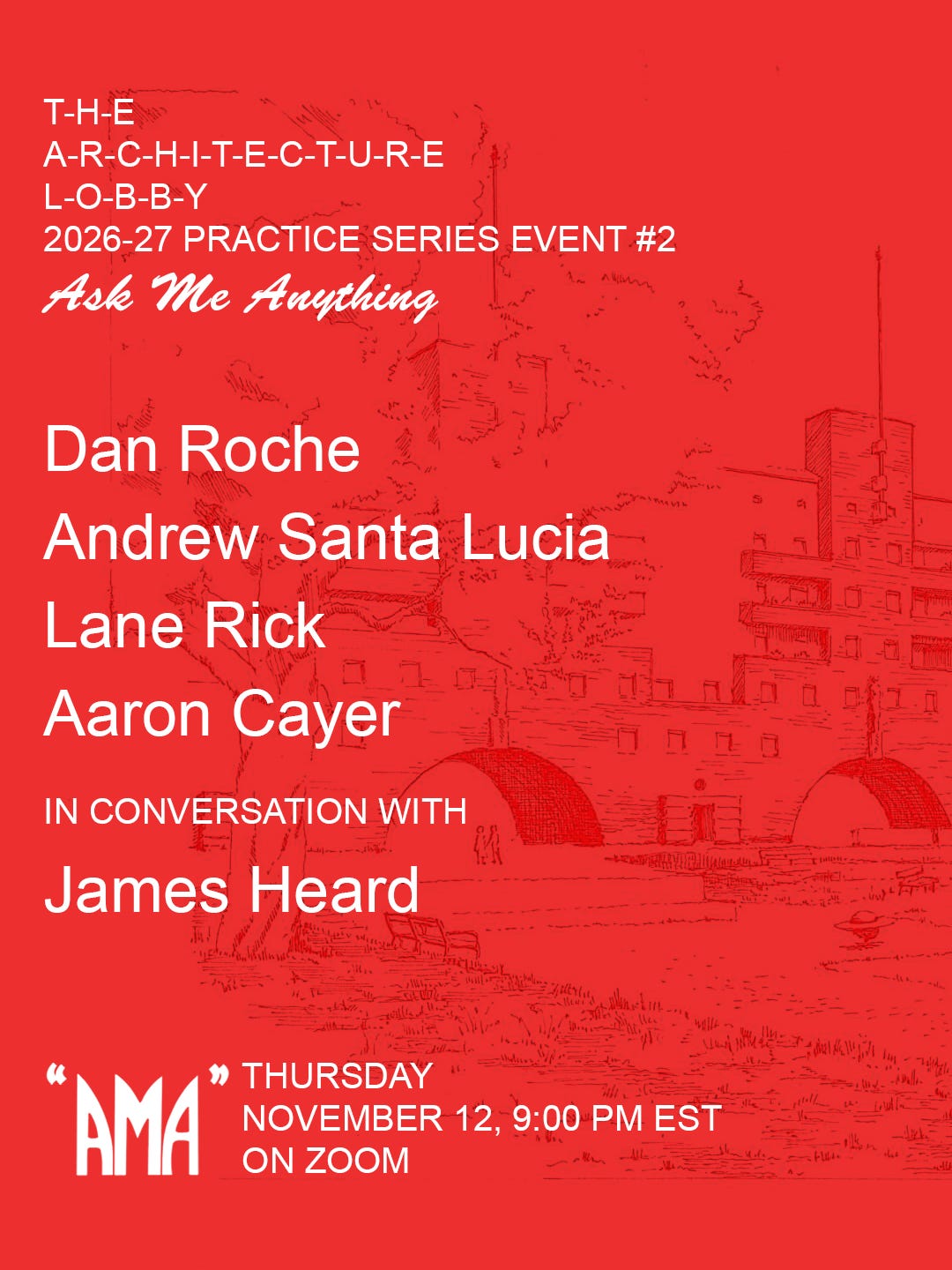
PRACTICE SERIES: AMA #2, THURSDAY NOVEMBER 12
Dan Jonas Roche
Andrew Santa Lucia
Lane Rick
Aaron Cayer
In conversation with James Heard
“AMA” Ask Me Anything
R-E-S-E-A-R-C-H
W-R-I-T-E
D-R-A-W
Thursday, November 12, 9:00 PM EST, on Zoom
Save event to Google Calendar: https://calendar.app.google/XQvGeMmZpAukvbug9
Dan Jonas Roche is news editor of The Architect’s Newspaper and part-time lecturer at The New School. His writing has been featured in eflux, Brooklyn Rail, The Architectural Review, Art of the Working Class, New York Review of Architecture, and other publications.
Andrew Santa Lucia is an architectural designer, theorist, and educator whose research and design practice are grounded in antifascist politics, mutual aid, and collective self-determination. He is co-author of Antifascist Architecture, which situates architecture within struggles against fascism and neoliberal capitalism, with a focus on contemporary utopianisms. His work explores how grassroots organizing, mutual aid networks, and community control can build collective power and advance alternative forms of social and spatial organization. Moving between architectural history and theory, design, graphic communication, and political organizing, Santa Lucia approaches research and practice as mutually informing processes. He is Associate Professor of Practice at Portland State University’s School of Architecture, where he teaches design and history, theory, and criticism. He also serves as Vice President of Communications and Public Relations for the PSU chapter of the American Association of University Professors. He was born and raised in Miami-Dade county.
Lane Rick is an architect, illustrator, and educator based in New York City. She is co-founder of Office of Things, a collaborative architecture and design studio exploring perception, material, and movement through installations and spatial interventions. She teaches architecture at City College New York and the University of Pennsylvania. Alongside her architectural practice, her drawings use detail, erasure, and layering to explore moments of engagement between people and space. She recently illustrated Antifascist Architecture.
Aaron Cayer is a Los Angeles-based historian, writer, and professor of architecture. He is currently an Associate Professor at Cal Poly Pomona and is the Co-President of the Board of Directors of the Architecture Lobby. His first book, Incorporating Architects: How American Architecture Became a Practice of Empire was published by UC Press in 2025. In it, he traces the rise of US-based architecture and engineering corporations, such as AECOM, as well as their impact on professions and politics after World War II.
James Heard is a PhD Candidate in Architecture at Columbia GSAPP and a licensed architect in California. His most recent work includes “Our best organizer!,” an essay for the Avery Review on the continuing relevance of the Federation of Architects, Engineers, Chemists, and Technicians co-authored with Joshua Barnett, Adare Brown and Jack Rusk; and Stull & Lee: Black Architecture Vision for an Infrastructural City, an exhibit on how the work of architecture firm Stull & Lee has shaped the city of Boston, prepared in collaboration with Gabriel Cira and Julian Phillips.
This “Ask Me Anything” event will be a conversation about research and writing practices that examine alternative narratives and critique current dominant systems of architectural practice.
⇨ What shapes academic research and how do individuals or institutions determine which questions about architectural history, theory or practice to pursue?
⇨ How can architectural history and theory move beyond critique to influence models of alternative forms of practice and production?
⇨ What can architectural workers learn from higher education organizing to build collective power across the discipline?
https://architecture-lobby.org/event/ama-research-write-draw/
———————————————
Film Updates
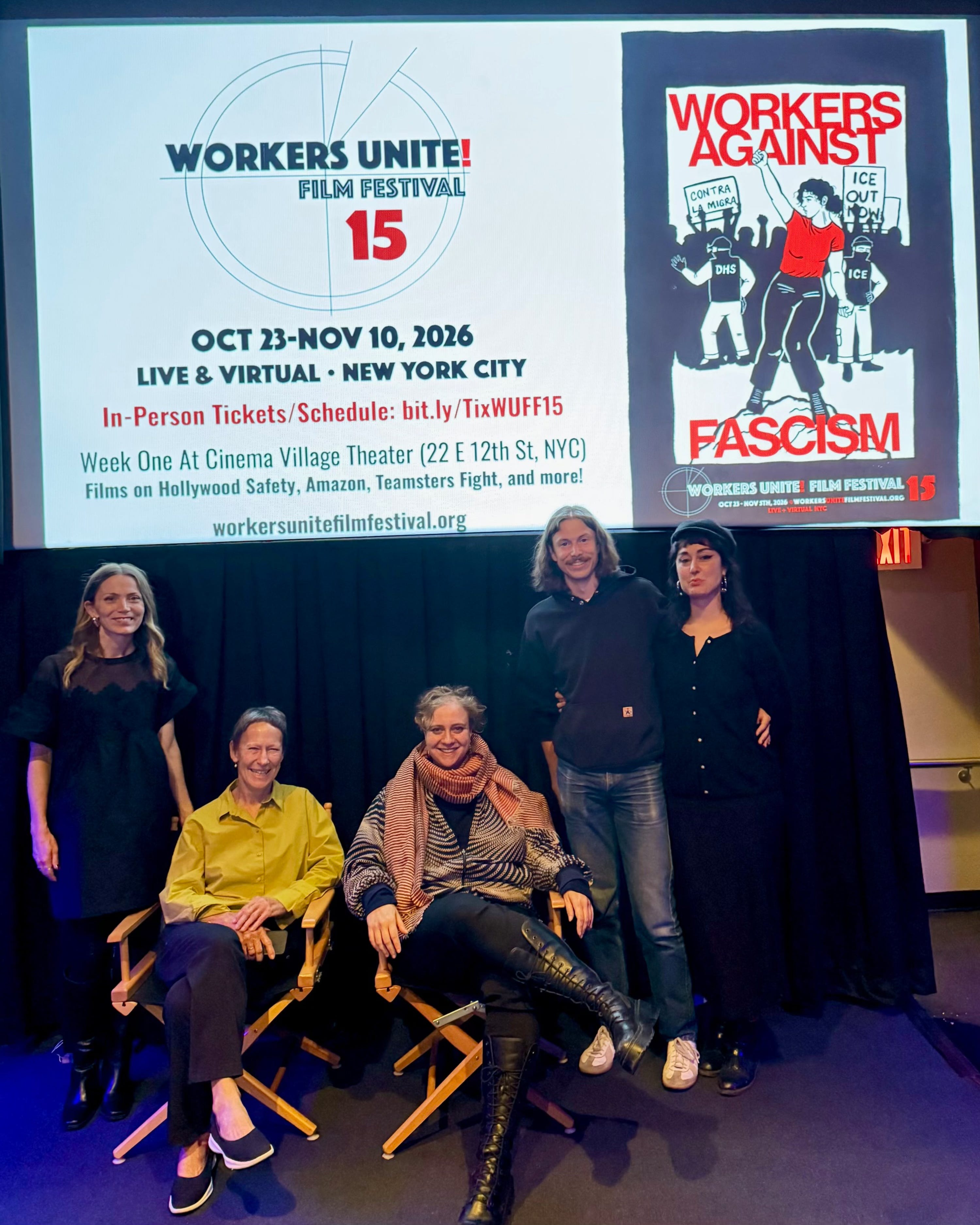
Architecture Workers: Organizing for Change is out in the world! On October 25, the film had its US premiere at the Workers Unite Film Festival at Cinema Village in New York, alongside 70% Informals and shorts from fired federal workers. Earlier in the month, on October 16, it had its international premiere at the Istanbul International Architecture and Urban Films Festival at Beyoğlu Cinema. And in London, it received an Honorable Mention from the Activists Without Borders Film Festival. Thank you to everyone who came out, shared, and brought friends.
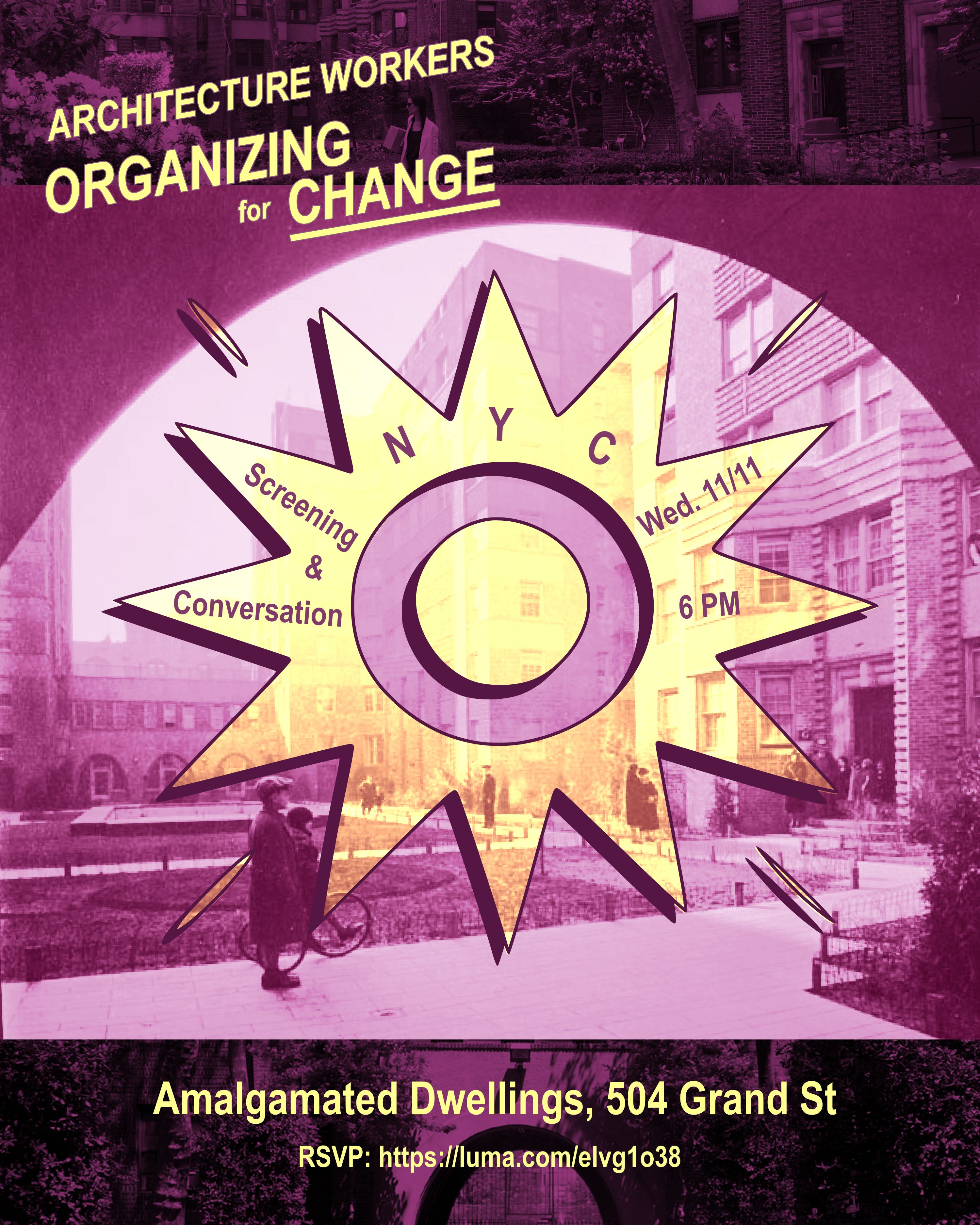
NYC SCREENING: WEDNESDAY NOVEMBER 11
Join us for a screening and conversation at Amalgamated Dwellings on the Lower East Side, a housing cooperative built by the Amalgamated Clothing Workers union in 1930. Doors at 6:00 PM, film at 6:20 PM. Pizza and refreshments provided. Amalgamated Dwellings Community Room, 504 Grand St RSVP (required for entry): https://luma.com/elvg1o38
THE SCREENING GUIDE IS LIVE!
Want to bring the film to your school, office, union hall, or living room? Our new screening and discussion guide walks you through it, with discussion questions for each of the film’s seven calls to action. Screenings are free. Show the full 50 minutes, a 20-minute cut of Chapters 1, 3 and 7, or any combination of chapters that fits the conversation your group wants to have. Read the guide: https://architecture-lobby.org/news/screening-guide
Get in touch: strategy@architecture-lobby.org
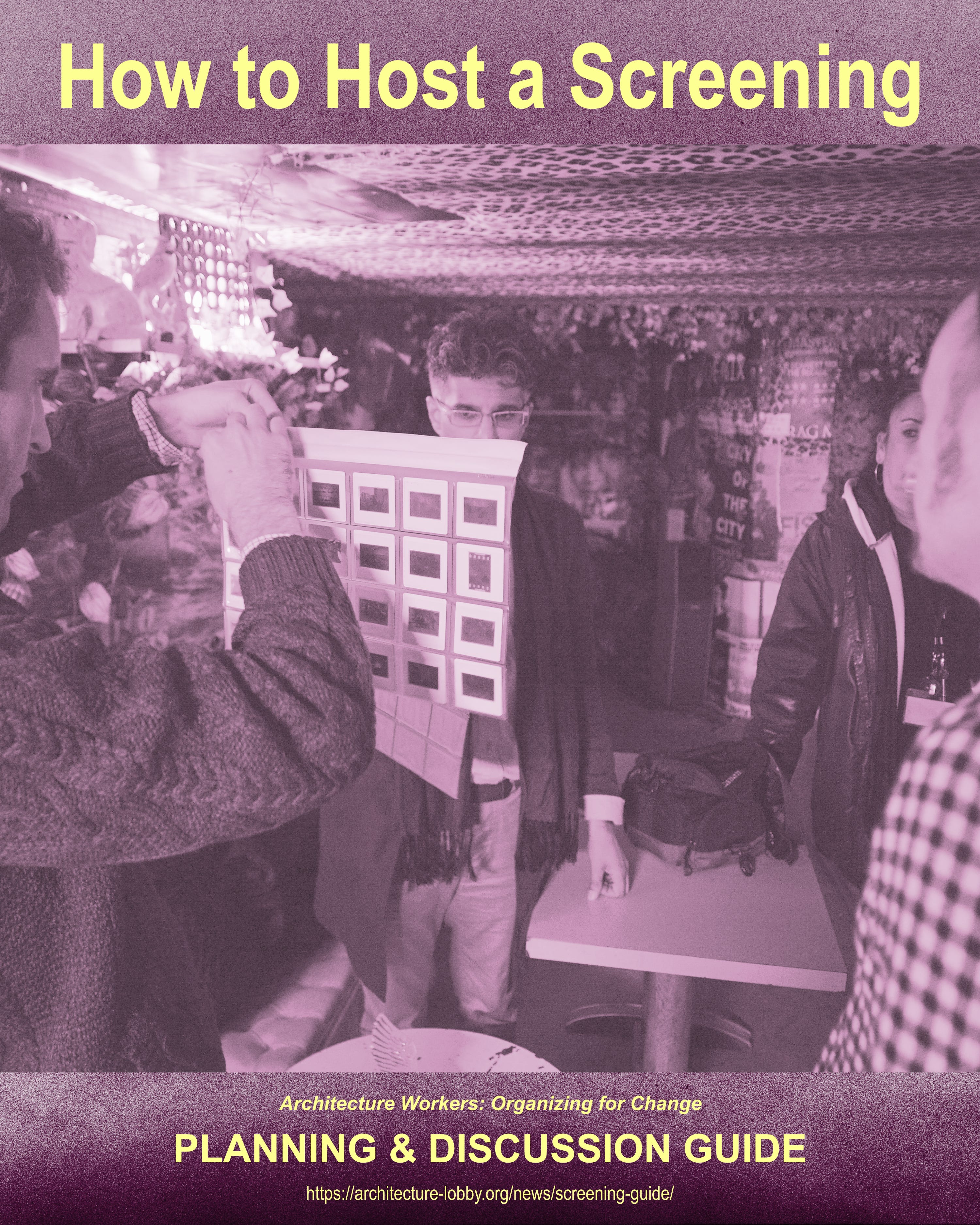
CHAPTER 2 IS LIVE ONLINE
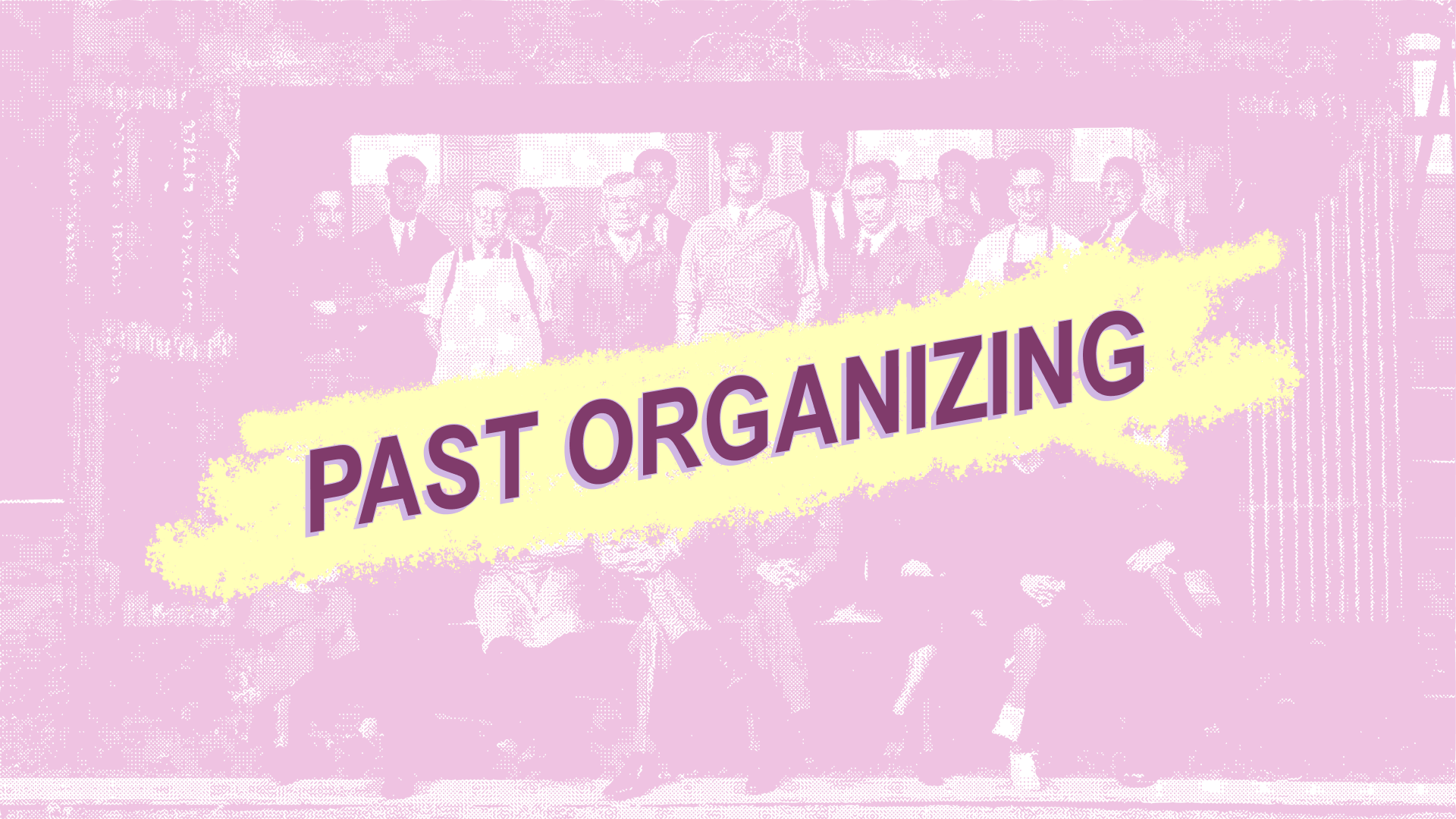
Chapter 2, Past Organizing, traces the history of architecture workers organizing in the US, from the Federation of Architects, Engineers, Chemists and Technicians to the Red Scare, and asks what that history means for us today. A new chapter goes online every month through April. Watch Chapter 2: architecture-lobby.org/news/2-past-organizing